
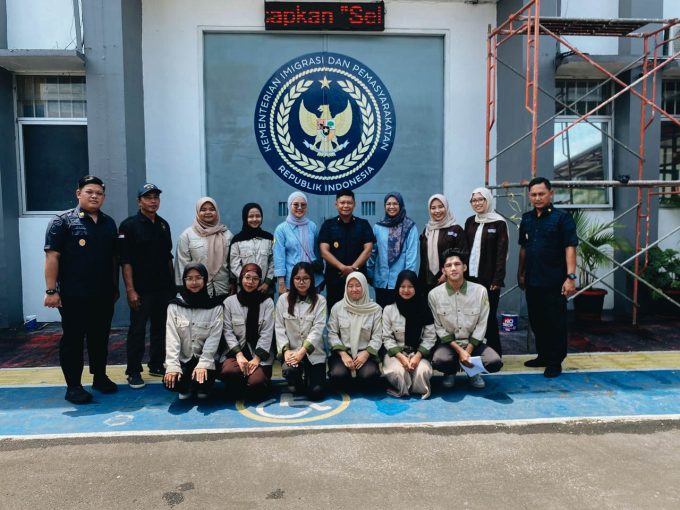
Organic waste management remains a significant challenge in Indonesia, requiring innovative and collaborative solutions. One promising approach is maggot cultivation, which offers an efficient and environmentally friendly method for processing organic waste. In response to this issue, two alumni from the Department of Agricultural Socio-Economics (Sosek), Faculty of Agriculture, Universitas Gadjah Mada—majoring in Agricultural Extension and Communication—are actively involved in a research project examining stakeholder perceptions of maggot cultivation practices.
Conducted from mid-March to April in the Yogyakarta and Banyumas regions, this research is organized by the Center for Agro-Technology Innovation (PIAT) UGM in collaboration with EarthCare Foundation. In this initiative, Department of Agricultural Socio-Economics (Sosek) Alumni Class of 2021 Nari Nawang Purbamandala,S.P. and Alifia Khairun Naswita, S.P. contribute as surveyors and research assistants, engaging directly with various stakeholders in the field.
The study covers multiple maggot cultivation sites representing different stakeholder groups, including Kandang Maggot Jogja, Hayuning Bhumi Makmur, and the Correctional Facility (Lapas) Purwokerto. Findings indicate that community-based and private sector actors tend to prioritize economic benefits, while government institutions focus more on community empowerment. Despite these differences, all stakeholders share a common goal of promoting environmental sustainability.
Maggot cultivation demonstrates strong potential in reducing organic waste, with the capacity to decompose approximately 500 kilograms to 1 ton per day. However, several challenges remain, including limited feed supply, inadequate human resource capacity, limited institutional support, and logistical constraints in distribution, as maggots are sensitive to heat during delivery. To address feed shortages, cultivators collaborate with hotels, restaurants, and local waste collection points to secure a steady supply of organic waste. In addition, stakeholders produce various outputs such as fresh maggots, processed products, and kasgot, each marketed through different strategies.
This research highlights the tangible contribution of Sosek UGM alumni in addressing real-world environmental issues through a socio-economic and participatory approach. It also reflects the role of Agricultural Extension and Communication in bridging stakeholders and supporting sustainable practices.
In line with this, this initiative also contributes to the achievement of the Sustainable Development Goals (SDGs), particularly SDG 8: Decent work and economic growth, SDG 12: Responsible consumption and production, and SDG 13: Climate action.
Author: Natasya Putri Alifia, S.P.
Admin of the Website for the Department of Agricultural Socio-Economics, Faculty of Agriculture, UGM
Documentation: Alifia Khairun Naswita