
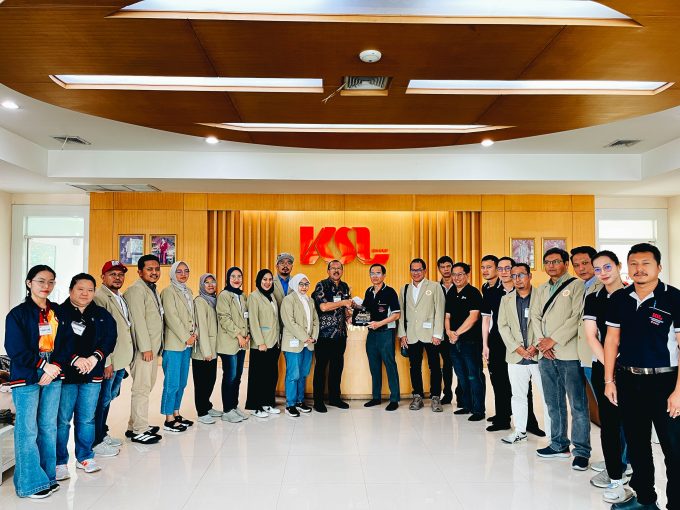
Students of the Master of Agricultural Economics (MEP) Program, Faculty of Agriculture, Universitas Gadjah Mada, particularly the National Sugar Synergy (SGN) collaborative class, participated in a Widyakarya program in Thailand in April 2026. The program was designed to broaden students’ perspectives on the transformation of the sugarcane value chain and the integrated sugar industry from upstream to downstream within a global context.
During the program, students visited several strategic institutions in Thailand, including the Thailand Sugarcane Breeding Center (TSBC), the Sugarcane and Sugar Industry Promotion Center, Thai Sugar Mills Corporation, and the New Krung Thai Sugar Mill and Ethanol Plant. Through these visits, students gained firsthand experience in understanding the development of a modern sugar industry supported by technological integration, research, supply chain strengthening, and product diversification.

The visit to the Thailand Sugarcane Breeding Center provided insights into the importance of innovation in superior sugarcane varieties to improve agricultural productivity and product quality. Meanwhile, at the Sugarcane and Sugar Industry Promotion Center, students learned how collaboration among government institutions, research centers, industries, and farmers contributes to the development of a sustainable and competitive sugar sector.
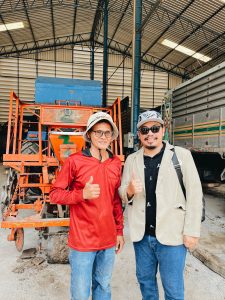
Students also had the opportunity to observe the sugar production process directly at Thai Sugar Mills Corporation and the New Krung Thai Sugar Mill and Ethanol Plant, from raw sugarcane processing to the production of sugar, ethanol, and electricity. These visits offered valuable insights into industrial efficiency, waste utilization, and downstream strategies that enhance the added value of sugarcane commodities.
Beyond academic learning, the Widyakarya program also expanded students’ understanding of how agricultural economics theories are applied in the global industrial sector. Lessons on technology adoption, logistics efficiency, product diversification, and supply chain partnerships are expected to inspire the development of a more innovative, inclusive, and competitive sugar industry in Indonesia.
Through this program, MEP UGM students not only gained broader knowledge of international agribusiness systems but also strengthened their readiness to contribute as future academics and practitioners in advancing Indonesia’s agricultural sector, particularly in supporting the acceleration of national sugar self-sufficiency.
This Widyakarya program also aligns with several Sustainable Development Goals (SDGs), including SDG 4: Quality education, SDG 9: Industry, innovation and infrastructure, and SDG 12: Responsible consumption and production.
Author: Natasya Putri Alifia, S.P.
Admin of the Website for the Department of Agricultural Socio-Economics, Faculty of Agriculture, UGM