
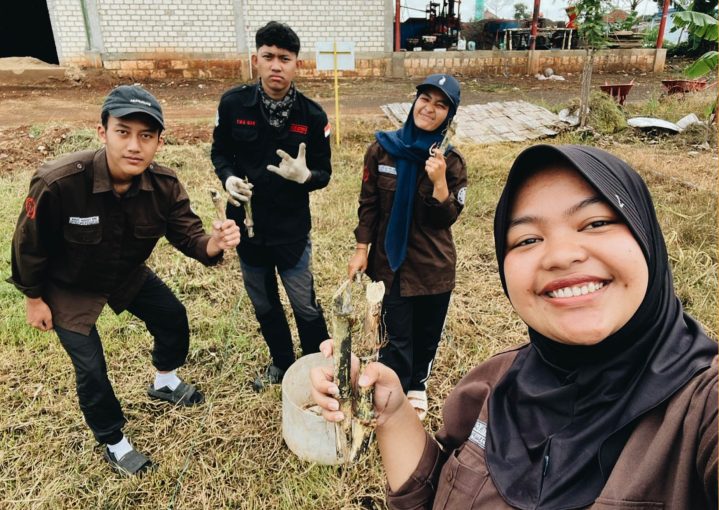
The Magang Berdampak program serves as a platform for contextual learning, enabling students to gain direct exposure to real-world working environments. This is reflected in the experience of a student from the Agricultural Extension and Communication Study Program, Department of Agricultural Socio-Economics, Faculty of Agriculture, Universitas Gadjah Mada, who participated in an internship at the Cakrawala Nusantara Energy Producer Cooperative (ECN) located in the Tanjung Awar-Awar Steam Power Plant, Tuban Regency.
At the initial stage, the student underwent an adaptation process to understand the organizational structure, cooperative members, and the direction of business development. This phase became an essential foundation for navigating workplace dynamics, highlighting that communication skills and social adaptability are crucial when working within community-based environments.
During the internship, the student was directly involved in various operational activities, including fertilizing elephant grass fields for livestock feed, maintaining animal enclosures, and feeding livestock such as chickens and deer on a daily basis. These hands-on experiences provided practical insights into how discipline, consistency, and proper management play key roles in the success of livestock-based enterprises.
In addition to field activities, the student also contributed to communication and information dissemination efforts by designing promotional media such as flyers and folders. This experience emphasized that extension activities are not limited to verbal communication but can also be effectively delivered through engaging and accessible visual media, aligning with the core competencies of Agricultural Extension and Communication.
The internship also provided opportunities to develop public communication skills, particularly through involvement in assisting comparative study visits from external parties. This role required the student to explain the cooperative’s systems and management practices in a structured and comprehensible manner. Furthermore, participation in routine meetings and social activities within the cooperative highlighted the importance of strong interpersonal relationships and social cohesion as key elements in sustaining community-based organizations.
Through this MBKM program, the student not only gained a deeper understanding of community empowerment and development communication theories but also observed their real-world application. This experiential learning process plays a significant role in enhancing students’ work readiness and social awareness.
This internship activity is also aligned with the Sustainable Development Goals (SDGs), particularly SDG 4: Quality education through practice-based learning, SDG 8: Decent work and economic growth through strengthening community-based enterprises, and SDG 12: Responsible consumption and production through sustainable livestock and resource management practices.
Author: Natasya Putri Alifia, S.P.
Admin of the Website for the Department of Agricultural Socio-Economics, Faculty of Agriculture, UGM
Documentation: Muhamad Yusron Sidiq